
A common misconception in decentralized finance is that your wallet is safe as long as you never share its seed phrase. That is an important rule, but it is not the whole security model. A wallet can remain under your control while a smart contract still has permission to move certain tokens on your behalf. In other words, the danger is often not that someone steals the key; it is that you approve the wrong permission.
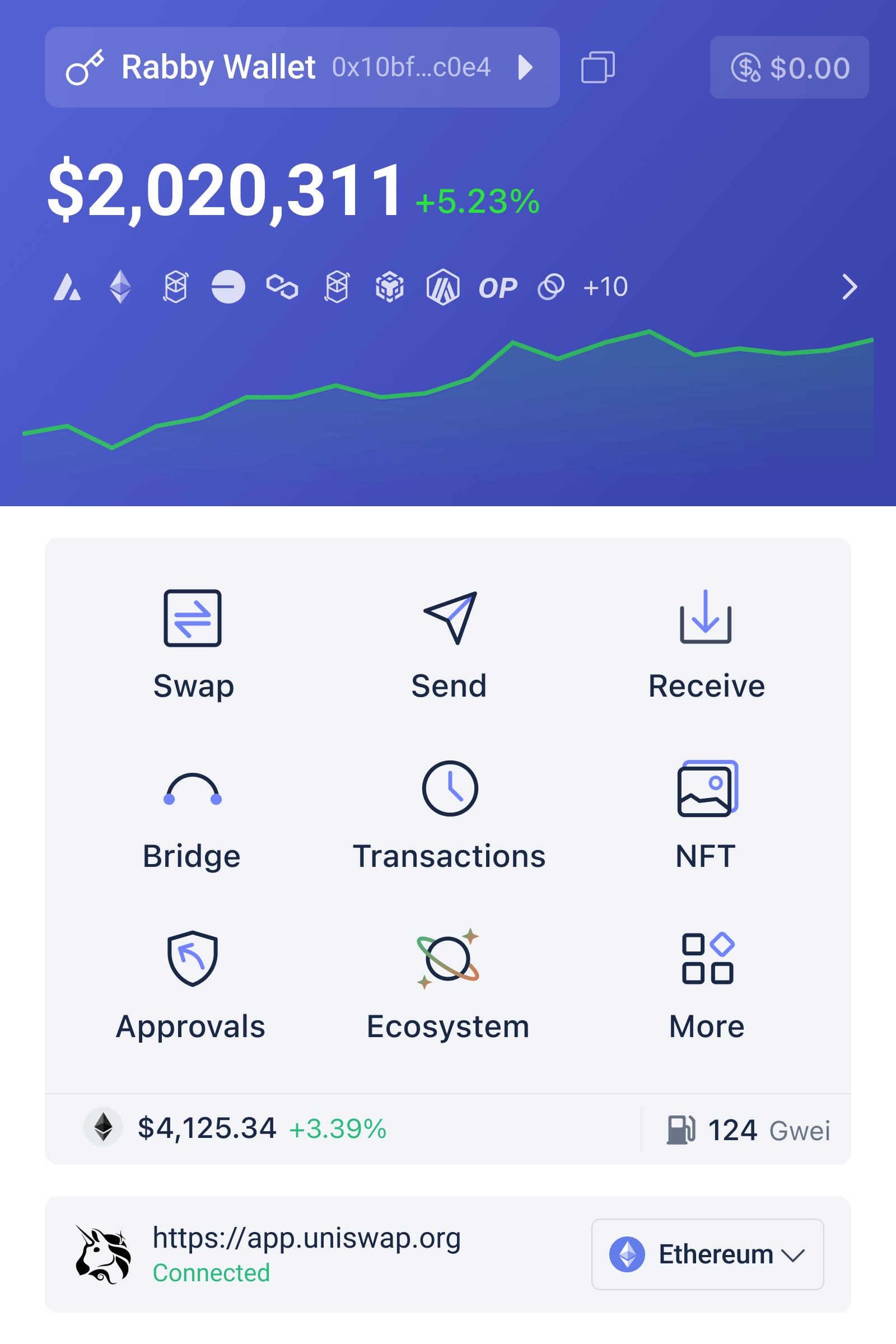
Token approval management is therefore less like locking a vault and more like managing a set of standing authorizations. Every approval can be useful, temporary, excessive, misunderstood, or maliciously obtained. Rabby Wallet is relevant because a browser wallet sits at the point where users inspect websites, sign transactions, and interact with contracts. Its value is not simply storing an address. It can help users reason about what an interaction appears to do before they sign, while the final responsibility still belongs to the person controlling the wallet.
What a token approval actually authorizes
On many Ethereum-compatible networks, an ERC-20 token uses an allowance system. You hold tokens in the token contract, and a separate application contract may need permission to spend them for a swap, deposit, lending transaction, or liquidity position. When you approve a decentralized exchange to spend USDC, for example, you are usually not sending USDC at that moment. You are changing a record that says the exchange’s specified spender may transfer up to a certain amount from your balance.
That distinction is easy to miss because approval and use often occur in the same user journey. A first-time swap may ask for an approval transaction, followed by a second transaction that performs the trade. The approval can remain active after the trade is complete. If the allowance is unlimited, the permission may continue to cover future balances as well. The contract cannot normally spend more than the allowance, but the allowance itself can become a liability if the approved contract is later exploited, upgraded in an unsafe way, or replaced by a malicious address in a deceptive interface.
The sharper mental model is this: an approval is a capability, not a payment. A payment changes ownership now; a capability permits a future action under defined conditions. Security depends on the spender address, the approved token, the allowance amount, the contract’s behavior, and the user’s assumptions about the application. That is why a wallet balance alone is an incomplete picture of exposure.
Why “unlimited approval” is a security trade-off
Applications often request a very large allowance because it avoids asking for a new approval on every interaction. This improves convenience and can reduce repeated transaction fees, especially on networks where users make frequent trades or deposits. It also reduces friction for applications that expect users to interact repeatedly.
The cost is persistence. A limited approval constrains the maximum amount a spender can transfer under that allowance. An unlimited approval removes that particular ceiling, so the risk is connected to the value of the token balance you later hold, not only the amount you owned when you first approved the contract. This does not mean every unlimited approval is immediately dangerous. It means the user has exchanged a narrower permission for a more durable one.
For occasional users, a deliberately limited allowance may be the more intelligible choice. For active users, a broad approval may be reasonable for a well-understood protocol, but it should be treated as an ongoing security decision rather than a one-time setup step. The right choice depends on how often the application is used, how much value is exposed, how costly approvals are, and how confidently the contract and interface can be identified.
Rabby can be part of that review process when you rabby extension download and install the browser extension from a source you have independently verified. A wallet interface may present contract, network, asset, and transaction details in a more readable way than raw hexadecimal data. That can make suspicious mismatches easier to notice. It cannot, however, prove that a contract is safe or guarantee that a website has not changed its behavior.
Approval management is broader than revoking allowances
Many users discover approval security through token-revocation tools. Revoking an allowance is useful, but it is a form of cleanup, not a complete defense. It generally requires another on-chain transaction, so it consumes gas and may be unavailable or impractical during congestion. A revocation also addresses a recorded allowance; it does not undo a transfer that already happened, recover funds from a compromised contract, or protect against every kind of signed message.
That last boundary matters. Some DeFi interactions use mechanisms such as signed permits, in which a user signs authorization data that can later be submitted on-chain. A familiar wallet prompt does not automatically mean that the transaction is harmless, and an allowance dashboard may not capture every off-chain signature or application-specific permission. Users should distinguish between an on-chain approval, a transaction that consumes an approval, a permit-style signature, and a direct transfer. They are related, but they are not interchangeable.
There is also a difference between a contract being malicious and a legitimate contract being vulnerable. Approval risk exists in both cases. A phishing site may direct a user to an attacker-controlled spender, while a real protocol may suffer a bug or an exploit that changes the practical risk of an existing authorization. This is why reputation is evidence, not proof. A familiar brand, a large community, or a previously successful transaction should not replace checking the exact network and contract address.
Three approaches, and what each one gives up
Wallet-first review
The first approach is to inspect each request at signing time through a wallet such as Rabby. This is the fastest line of defense because it places attention at the decision point. Users can compare the requested network, token, recipient or spender, amount, and resulting state change with what they intended to do. The trade-off is cognitive load: careful review takes time, and a clear-looking simulation can still depend on assumptions about external contracts and future state.
Periodic allowance monitoring
The second approach is scheduled review. A user checks active approvals across the networks they use, removes obsolete permissions, and keeps meaningful allowances narrow where practical. This method catches stale exposure that signing-time checks cannot. Its weakness is operational: users may forget secondary wallets, obscure chains, or approvals created months earlier. It is most effective when treated like a recurring account-control task rather than an emergency ritual.
Separate wallets and spending limits
The third approach is compartmentalization. A user can keep long-term holdings in a less frequently connected wallet and use a separate wallet for experimental protocols, airdrops, or unfamiliar applications. Hardware wallets can strengthen key protection, while multisignature arrangements can reduce the chance that one compromised key completes a high-value action. These tools address different threats from token approvals. A hardware wallet helps protect signing keys, but it does not make a dangerous approval safe; a separate hot wallet limits blast radius, but it does not prevent losses within that wallet.
There is no universal winner. Wallet review is convenient and immediate, monitoring is good for persistence, and compartmentalization limits consequences. A sensible US user may combine all three: review each prompt, monitor approvals periodically, and avoid connecting a primary savings wallet to every new DeFi site. The goal is not perfect elimination of risk, which is unrealistic in permissionless systems. It is reducing the amount, duration, and concentration of risk.
A practical approval-review routine
Before signing, ask four questions. What asset is involved? Which exact contract or spender is receiving permission? Is the amount limited to the intended action, or is it effectively unlimited? What happens if this contract is compromised tomorrow? The final question is especially useful because it converts a technical prompt into an exposure decision.
After using a protocol, decide whether the authorization still has a purpose. If not, revoke it when the cost and network conditions make sense. Keep records of the applications you intentionally use, because an unfamiliar allowance is not automatically malicious; it may come from a router, aggregator, vault, or other component of a transaction. Conversely, a recognizable application name is not enough. Address-level verification matters.
When installing a browser wallet, confirm that the extension comes from a trusted, independently checked source and that the browser permissions and download flow look consistent. Never paste a seed phrase or private key into a website, support form, or “verification” page. A wallet can improve visibility into transactions, but it cannot rescue credentials voluntarily disclosed to an attacker. Security is layered: key custody, website verification, transaction interpretation, approval hygiene, and post-use monitoring each cover different failure modes.
What to watch as DeFi interfaces mature
The next meaningful improvements are likely to come from better permission semantics rather than louder warnings. Users need to know not only that a contract is being called, but what capability is being granted, how long it lasts, which assets it can affect, and whether the permission can be constrained. If wallets and protocols make those properties more legible, users may be able to choose bounded permissions without understanding every line of contract code.
That outcome is conditional, not guaranteed. Interfaces can misclassify contracts, simulations can differ from final execution, and new token standards or signature schemes may create permissions that existing approval tools do not fully represent. The practical signal to watch is whether security tools move from transaction summaries toward explicit, persistent permission inventories. Until then, the safest assumption is modest: a wallet can make decisions clearer, but it cannot turn an inherently adversarial environment into a trusted one.
FAQ: DeFi token approvals and Rabby Wallet
Does revoking an approval return stolen tokens?
No. Revoking changes a future spending allowance. It does not reverse transfers that have already been confirmed on-chain, recover assets from a compromised contract, or undo a signature that was already used. If funds have moved, the issue is no longer merely an allowance-management problem.
Is a limited approval always safe?
No. A limited allowance reduces the maximum amount covered by that specific permission, but it does not make the spender trustworthy. A user can still approve the wrong contract, sign a malicious transaction, expose a private key, or authorize another type of message. Limitation reduces one dimension of risk; it does not remove the need to verify the application and transaction.
Can Rabby Wallet replace an approval-monitoring routine?
No wallet should be treated as a substitute for user judgment or periodic review. Rabby may help present transaction and contract information in a more understandable form, but users should still track active permissions, use separate wallets where appropriate, and revisit approvals after they stop using a protocol.
The central lesson is simple but easy to overlook: your wallet address is not only a container of assets; it is also a collection of permissions granted to contracts. Managing those permissions changes the shape of your exposure. Review what you are authorizing, limit what you can, remove what no longer serves a purpose, and keep high-value holdings away from unnecessary experimentation. In DeFi, that discipline is often more valuable than a single security feature.